

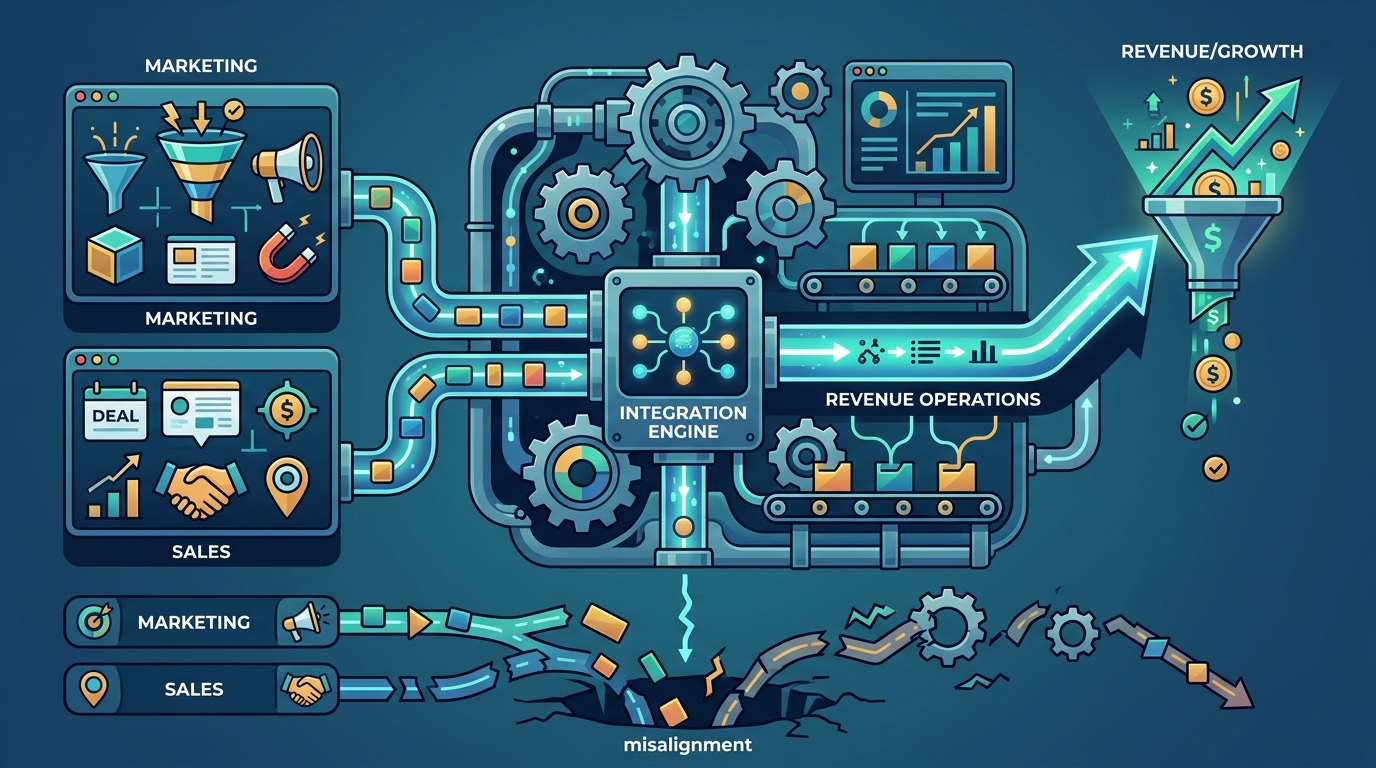
In 2026, the gap between high-performing B2B companies and their struggling competitors is no longer defined by talent alone. It is defined by infrastructure. Revenue operations have shifted from a support function to the central nervous system of growth. Companies that fail to integrate their sales and marketing data into a single source of truth lose an average of 23% of their pipeline to friction and misalignment. This guide details the exact systems, processes, and technological frameworks required to build a predictable, scalable revenue engine.
1. The CRM as the Single Source of Truth
The foundation of any high-performing B2B organization is a properly configured Customer Relationship Management (CRM) system. CRM is a technology for managing all your company's relationships and interactions with customers and potential customers. However, merely installing software is insufficient. The system must be configured to reflect your specific sales cycle, not the other way around. (AI Agents)
Many organizations struggle with data silos where marketing uses one platform and sales uses another. This disconnect leads to lost leads and inaccurate forecasting. A unified HubSpot implementation ensures that every touchpoint, from initial email open to final contract signature, is tracked in one timeline. This visibility allows leadership to identify bottlenecks in real time.
According to recent industry benchmarks, companies that fully integrate their CRM with their marketing automation see a 29% increase in revenue predictability. This integration requires rigorous data hygiene protocols. You must establish rules for contact deduplication, mandatory field completion, and lead scoring thresholds. Without these guardrails, the CRM becomes a graveyard of stale data rather than a tool for growth.
Implementation Best Practices
- Standardize Naming Conventions: Ensure all teams use identical terminology for deal stages and lead sources.
- Automate Data Entry: Reduce manual entry errors by integrating web forms and calendar tools directly into the CRM.
- Enforce Data Hygiene: Schedule quarterly audits to archive inactive contacts and update outdated information.
2. Marketing Operations & Automation
Marketing operations serve as the bridge between creative strategy and technical execution. Marketing operations is the discipline of planning, executing, and optimizing marketing activities using technology and data. In a B2B context, this means moving beyond vanity metrics like page views to focus on pipeline influence and conversion rates.
Effective marketing automation requires a robust tech stack. This stack typically includes a marketing hub, a sales engagement platform, and a customer success tool. When these systems communicate seamlessly, marketing can nurture leads through personalized workflows until they are sales-ready. Sales teams then receive hot leads with full context, allowing them to close deals faster.
Data shows that organizations with strong marketing and sales alignment achieve 208% greater revenue from marketing compared to those with poor alignment. Achieving this requires clear Service Level Agreements (SLAs). These agreements define exactly what constitutes a Marketing Qualified Lead (MQL) and how quickly sales must follow up. Without these defined processes, leads fall through the cracks, and ROI diminishes.
Key Automation Workflows
- Lead Nurturing Sequences: Automated email chains that provide value based on user behavior.
- Lead Scoring Models: Algorithms that assign points to contacts based on engagement and firmographic data.
- Handoff Protocols: Automated notifications that alert sales reps when a lead reaches a specific score threshold.
3. Standardizing the Sales Methodology
A repeatable sales process is the engine of B2B growth. Without a standardized methodology, sales outcomes rely on individual heroics rather than systemic predictability. Sales methodology is a structured approach to selling that defines the steps, techniques, and tools used to guide prospects from awareness to purchase. Common frameworks include Challenger Sale, SPIN Selling, and MEDDIC, but the best choice depends on your specific buyer journey.
Set2Close utilizes a buyer-centric sales approach that focuses on understanding and meeting the needs of the buyer. This involves shifting the focus from simply pitching products to creating a personalized experience for each buyer. This shift requires sales teams to be trained in discovery techniques that uncover pain points early in the conversation.
Furthermore, the sales process must be supported by clear documentation. A comprehensive sales playbook outlines objection handling scripts, competitive battle cards, and proposal templates. This ensures that every customer interaction meets a high standard of quality, regardless of which sales representative is managing the deal. Consistency builds trust, and trust accelerates the sales cycle.
Building Your Sales Playbook
Your playbook should include detailed profiles of your ideal customer. These profiles, known as buyer personas, help sales teams tailor their messaging to specific industries and roles. Additionally, include a tech stack outline that details the tools each rep should use daily. This reduces cognitive load and allows reps to focus on selling rather than navigating complex software.
4. Leveraging AI for Data Enrichment
The integration of Artificial Intelligence (AI) into B2B sales is no longer optional. It is a competitive necessity. AI agents can automate the most time-consuming aspects of prospecting, such as data extraction and profile building. AI agents are software programs that use machine learning to perform complex tasks autonomously, such as gathering prospect data or scheduling meetings.
Tools like Astro and Nebula, offered through advanced RevOps partners, can collect critical information in minutes rather than hours. These agents build comprehensive profiles of prospects and accounts, providing competitive intelligence that helps sales teams position their solutions effectively. By automating data enrichment, your team can spend more time on high-value activities like relationship building and negotiation.
Real-time data updates ensure that your CRM remains fresh and relevant. Automated data enrichment adds missing data points to complete profiles, while data quality assurance identifies and corrects errors. This level of precision allows for highly targeted account-based marketing campaigns that resonate with key decision-makers.
AI Integration Benefits
- Rapid Data Extraction: Gather contact details and firmographic data instantly.
- Competitive Intelligence: Identify market trends and competitor activities automatically.
- Seamless CRM Integration: Sync data directly into your sales platform without manual input.
5. The Role of Fractional Revenue Operations
For many B2B companies, hiring a full-time Chief Revenue Officer (CRO) or Head of RevOps is cost-prohibitive during the scaling phase. This is where fractional revenue operations becomes a strategic advantage. Fractional revenue operations is a service model where experienced revenue leaders provide part-time strategic and operational support to growing companies.
Fractional RevOps consultants bring decades of combined experience to your organization. They can help you transition from legacy systems like Salesforce to modern platforms like HubSpot, ensuring a seamless migration of contacts and data. They also help establish the foundational processes that allow your team to scale without breaking.
According to case studies from leading RevOps agencies, clients who engage fractional experts often see a 40% growth in Annual Recurring Revenue (ARR) within the first eight months. This growth is driven by the immediate optimization of existing workflows and the implementation of scalable systems. Fractional experts provide high-level strategy without the long-term commitment of a full-time executive.
When to Hire Fractional Help
Consider fractional RevOps when you are experiencing rapid growth, planning a CRM migration, or lacking internal expertise in marketing automation. These consultants can also assist with fast track onboarding for new hires, ensuring they become productive faster. Their objective is to build a self-sustaining revenue engine that operates efficiently with minimal oversight.
Key Takeaways
- Unified CRM: A single source of truth for all customer data is non-negotiable for accurate forecasting.
- Marketing Alignment: Integrated marketing and sales systems drive up to 208% greater revenue.
- Standardized Process: A documented sales playbook ensures consistency and reduces ramp-up time for new reps.
- AI Automation: AI agents like Astro and Nebula automate data enrichment, saving hours of manual work.
- Fractional Expertise: Fractional RevOps provides high-level strategy and implementation support at a flexible cost.
- Data Hygiene: Regular audits and automated deduplication prevent data decay and improve campaign accuracy.
- Buyer-Centricity: Shifting focus from product pitching to solving buyer problems increases conversion rates.
Frequently Asked Questions
What is the difference between RevOps and traditional sales management?
RevOps focuses on the alignment of sales, marketing, and customer success data and processes. Traditional sales management focuses primarily on individual rep performance and quota attainment. RevOps looks at the entire revenue lifecycle.
How long does a typical HubSpot implementation take?
Typically, projects range from 3 to 6 months depending on the complexity of the tech stack and the volume of data being migrated. Some teams require longer timelines to adapt to new workflows and produce deliverables.
What is buyer-centric sales?
Buyer-centric sales is an approach to selling that focuses on understanding and meeting the needs of the buyer. It involves shifting the focus from simply pitching products or services to creating a personalized experience for each buyer.
Why is data hygiene important for B2B sales?
Data hygiene ensures that your CRM contains accurate, up-to-date information. Poor data quality leads to wasted outreach efforts, damaged sender reputation, and inaccurate sales forecasts. Regular audits are essential.
Can AI replace human sales representatives?
No. AI agents like Astro and Nebula are designed to augment human capabilities by handling data-heavy tasks. They provide insights and automate administrative work, allowing humans to focus on relationship building and complex negotiations.
What is the cost of fractional RevOps services?
Pricing varies by project scope and individual needs. Most firms offer custom payment plans to suit the organization's budget. The goal is to make expenses feasible while delivering high-impact results.
How do I measure the success of my RevOps initiatives?
Key metrics include pipeline velocity, lead conversion rates, customer acquisition cost (CAC), and revenue predictability. Tracking these metrics over time reveals the impact of your operational improvements.
Start Your Engine
Building a high-performance B2B organization requires more than just good ideas. It requires a robust infrastructure of systems, processes, and people working in harmony. Whether you need a complete CRM migration, AI agent integration, or fractional RevOps support, the right partner can accelerate your growth trajectory.
Set2Close specializes in helping B2B companies build predictable revenue systems. We provide HubSpot optimization, marketing operations support, and strategic sales frameworks tailored to your unique business model. Do not let operational friction hold your growth back.
Contact Set2Close today to schedule a consultation and start building your revenue engine.