

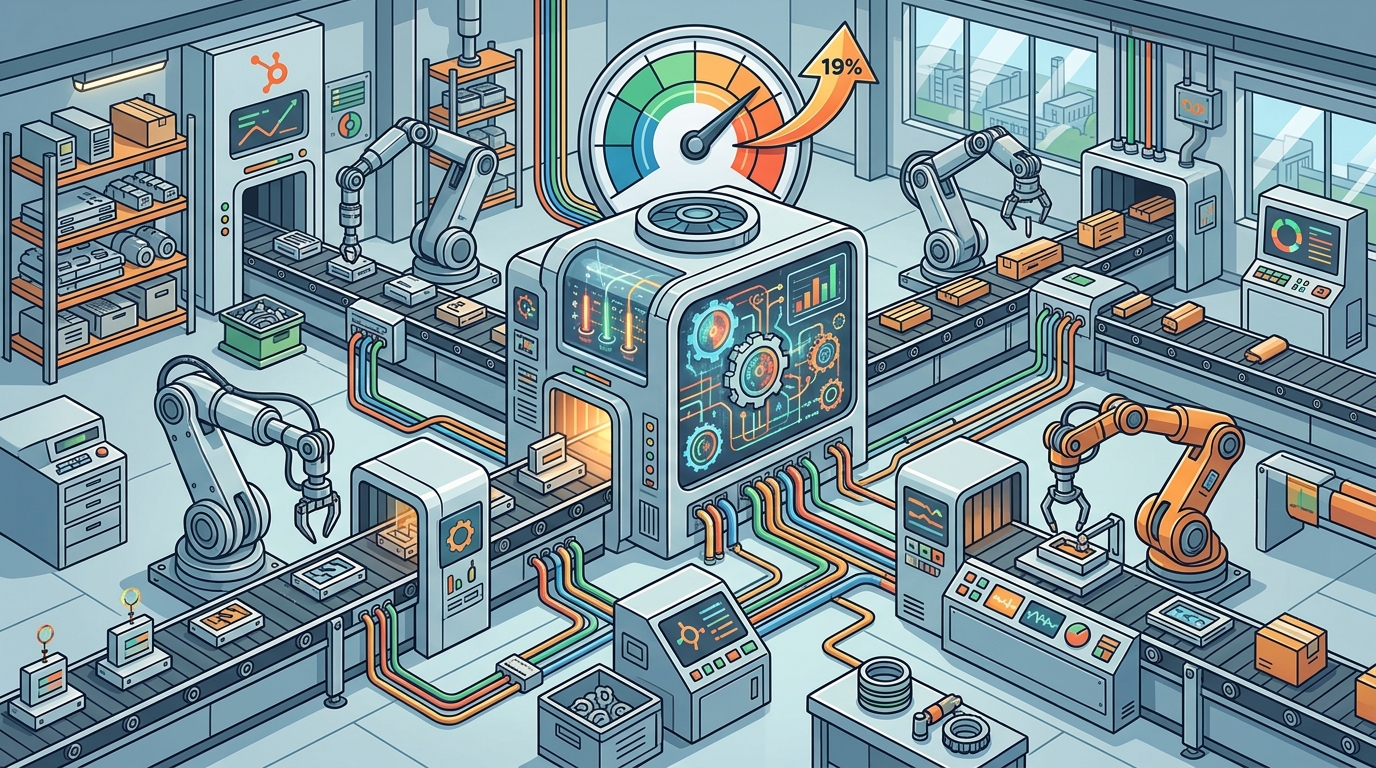
Revenue operations have become the central nervous system of modern B2B enterprises. According to recent industry data, companies that align their revenue operations with their technology stack see a 19% increase in overall revenue growth compared to those that do not. This statistic highlights the critical need for a unified approach to sales, marketing, and customer success. For growing B2B businesses, HubSpot serves as the primary engine for this alignment, but mere adoption is insufficient. True optimization requires a deliberate architecture of data flow, automation, and strategic governance. This guide details the exact methodologies required to transform HubSpot from a simple contact database into a predictive revenue engine. (Revenue Operations Agency About)
Foundational CRM Architecture
The first step in optimization is establishing a robust technical foundation. Many B2B companies fail because they treat HubSpot as a static repository rather than a dynamic system. CRM Architecture is the structural design of your data relationships, ensuring that information flows seamlessly between departments. Without this, sales teams work in silos, and marketing efforts lack precision. (B2B Sales Strategy Services)
To achieve this, you must define your object model clearly. This involves mapping out custom objects that reflect your specific B2B sales cycle, such as "Deals," "Accounts," and "Projects." Proper architecture ensures that when a lead enters the system, it is routed correctly based on predefined criteria. This process eliminates manual data entry errors and ensures that every stakeholder has access to real-time data. For businesses looking to implement this from the ground up, a structured HubSpot Onboarding process is essential to avoid common pitfalls during the initial setup phase.
Strategic Hub Selection
HubSpot offers a suite of products known as Hubs. Optimizing your instance requires selecting the right combination of these tools to match your current growth stage. Over-investing in unnecessary features drains budget, while under-investing creates operational bottlenecks. (Set2Close Revenue Ops Consultants)
| Hub Type | Primary Function | Optimization Goal |
|---|---|---|
| Marketing Hub | Lead generation and campaign management | Align content with buyer journey stages |
| Sales Hub | Pipeline management and outreach | Reduce sales cycle length via automation |
| Service Hub | Customer support and ticketing | Improve customer retention and satisfaction |
| CMS Hub | Website hosting and content management | Ensure SEO performance and page speed |
For B2B companies, the integration between the Marketing and Sales Hubs is particularly critical. This integration allows for Sales Marketing Alignment, a state where marketing campaigns directly feed qualified leads into the sales pipeline without manual intervention. Achieving this requires precise configuration of contact properties and list segmentation. If you are transitioning from another platform, a seamless HubSpot Implementation ensures that historical data is preserved and correctly mapped to new fields.
Advanced Automation & AI
Automation is the lever that scales B2B operations. Manual tasks such as data entry, email follow-ups, and lead routing consume valuable time that should be spent on high-value activities. By leveraging HubSpot’s workflow engine, you can automate these processes to ensure consistency and speed.
Recent advancements in artificial intelligence have further enhanced these capabilities. AI Agents are advanced tools that automate complex tasks like prospect research and data enrichment. These agents can scan public databases and social media to build comprehensive profiles of your prospects, allowing your sales team to personalize their outreach effectively. For example, using AI Agents can significantly reduce the time spent on manual data gathering, allowing reps to focus on closing deals.
Furthermore, automation extends to your internal operations. Documenting your Fractional Revenue Operations processes ensures that your automation rules are consistent across the team. This includes setting up automated lead scoring models that prioritize high-intent prospects based on their behavior and demographic fit. By implementing these systems, you create a predictable revenue engine that operates efficiently regardless of team size.
Data Governance & Hygiene
Data is the fuel for your revenue engine. If the data is inaccurate, your automation and analytics will fail. Data governance refers to the framework of policies and procedures that ensure data quality, security, and compliance. In the context of HubSpot, this means establishing strict rules for data entry and maintenance.
One of the most common issues in B2B sales is stale or duplicate data. This leads to wasted outreach efforts and inaccurate reporting. To combat this, you must implement regular data cleansing routines. This includes using tools to identify duplicates, standardizing address formats, and verifying email addresses. Additionally, you should establish a CRM Development & Build Outs strategy that includes regular audits of your custom properties and object relationships.
Compliance is another critical aspect of data governance. Regulations such as GDPR and CCPA require strict handling of personal data. HubSpot provides built-in compliance tools, but they must be configured correctly. This includes managing consent statuses for marketing communications and ensuring that data deletion requests are processed promptly. Ignoring these requirements can lead to significant legal penalties and damage to your brand reputation.
Revenue Attribution & Analytics
Optimization is impossible without measurement. You must track the performance of your marketing and sales efforts to understand what is working and what is not. Revenue attribution is the process of identifying which touchpoints contributed to a closed deal. This allows you to allocate your budget to the most effective channels.
HubSpot’s reporting dashboards provide a wealth of data, but interpreting this data requires a strategic approach. You should focus on key metrics such as customer acquisition cost (CAC), lifetime value (LTV), and sales cycle length. By analyzing these metrics, you can identify bottlenecks in your pipeline and optimize your processes accordingly. For instance, if you notice a long sales cycle, you might need to improve your lead qualification process or provide more sales enablement content.
Furthermore, you should leverage Account Based Marketing strategies to track performance at the account level. This allows you to see which accounts are engaging with your content and which are ready for sales outreach. By combining this data with your CRM insights, you can create a more accurate forecast and make informed decisions about resource allocation.
Key Takeaways
- Unified Architecture: A robust CRM architecture is the foundation of all optimization efforts, ensuring data flows seamlessly between departments.
- Hub Alignment: Strategic selection of Marketing, Sales, and Service Hubs ensures that you are investing in the right tools for your growth stage.
- AI Integration: Leveraging AI Agents for prospect research and data enrichment significantly reduces manual workload and improves data accuracy.
- Data Governance: Strict data hygiene and compliance protocols are essential for maintaining trust and avoiding legal penalties.
- Revenue Attribution: Accurate tracking of touchpoints allows for better budget allocation and more predictable revenue forecasting.
- Fractional Expertise: Engaging Fractional Revenue Operations experts can provide the specialized knowledge needed to optimize complex systems without the cost of a full-time hire.
- Continuous Improvement: Optimization is an ongoing process that requires regular audits, training, and adaptation to changing market conditions.
Frequently Asked Questions
What is the first step to optimizing HubSpot for B2B?
The first step is to audit your current CRM architecture and data flow. This involves identifying gaps in your data, ensuring proper integration between hubs, and defining clear processes for lead management.
How does AI improve HubSpot optimization?
AI improves optimization by automating repetitive tasks such as data entry, lead scoring, and prospect research. This allows sales teams to focus on high-value activities and ensures that data is always up-to-date.
What is the difference between Marketing Hub and Sales Hub?
Marketing Hub focuses on generating leads and managing campaigns, while Sales Hub focuses on managing the pipeline and closing deals. Both are essential for a complete B2B strategy.
How often should I audit my HubSpot instance?
You should conduct a comprehensive audit at least quarterly. This includes reviewing data hygiene, checking integration health, and assessing the performance of your automation workflows.
Can I migrate from Salesforce to HubSpot?
Yes, HubSpot offers robust migration tools and services. It is recommended to work with a certified partner to ensure a seamless transition with minimal data loss.
What is Revenue Operations (RevOps)?
Revenue Operations is a strategic approach that aligns sales, marketing, and customer success teams under a single technology stack and set of processes to drive predictable revenue growth.
How do I measure the ROI of my HubSpot investment?
You can measure ROI by tracking key metrics such as customer acquisition cost, lifetime value, and revenue growth attributed to HubSpot campaigns. Comparing these metrics to your investment costs will give you a clear picture of your return.
Start Your Engine
Optimizing HubSpot for your B2B business is not a one-time task but a continuous journey of refinement and growth. By implementing the strategies outlined in this guide, you can transform your revenue operations into a powerful engine for scalable growth. Whether you need help with initial implementation, ongoing optimization, or strategic consulting, Set2Close is here to support your journey. Contact us today to schedule a consultation and discover how we can help you unlock your business's full potential.