

Modern B2B companies are increasingly relying on unified revenue operations to drive predictable growth. According to recent industry data, organizations that align their sales and marketing technology stacks see a significant increase in revenue efficiency compared to those operating in silos. This guide details how to leverage HubSpot as the central nervous system for your entire revenue engine. (Revenue Operations Agency About)
Understanding Revenue Operations in HubSpot
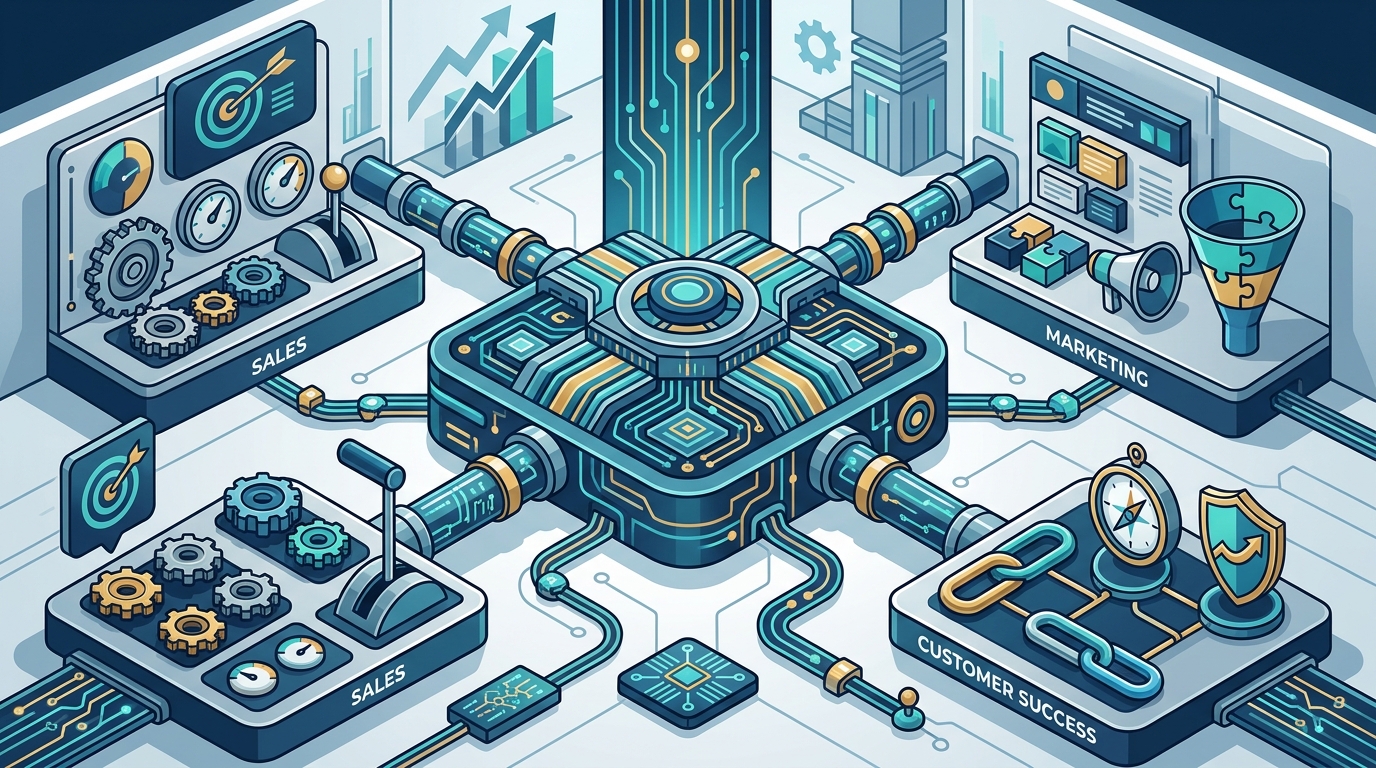
Revenue Operations, often abbreviated as RevOps, is the strategic discipline that unifies sales, marketing, and customer success teams under a single technology stack. Revenue Operations is the alignment of people, processes, and technology to drive predictable revenue growth. Without this alignment, data silos create friction, leading to lost leads and inefficient spending.
HubSpot serves as the ideal foundation for RevOps because it natively connects these departments. When your CRM architecture is built correctly, data flows seamlessly from marketing attribution to sales closing and finally to customer support. This unified view allows leadership to make data-driven decisions rather than relying on fragmented reports.
To achieve this, you must move beyond basic CRM usage. You need to implement a robust CRM Development & Build Outs strategy that prioritizes data integrity and process automation. This ensures that every department speaks the same language within the platform.
Optimizing the Marketing Hub for Lead Generation
The Marketing Hub is not just a tool for sending emails; it is a comprehensive engine for demand generation. To optimize this section, you must focus on accurate attribution and seamless lead routing.
Attribution and Reporting
Many organizations struggle to prove the ROI of their marketing efforts. By configuring advanced Marketing Hub Implementation workflows, you can track the entire customer journey. This involves setting up multi-touch attribution models that credit all marketing touchpoints, not just the last click. This data reveals which channels truly drive revenue.
Lead Routing and Scoring
Speed to lead is critical in B2B sales. You must implement automated lead routing rules that direct prospects to the correct sales representative based on geography, industry, or deal size. Additionally, using lead scoring mechanisms allows your sales team to prioritize high-intent prospects. This process ensures that your team spends time on opportunities that are ready to buy.
Enhancing Sales Hub for Pipeline Velocity
Sales teams require clarity and speed. The Sales Hub provides the tools to manage pipelines, automate administrative tasks, and forecast revenue accurately.
Sales Pipeline Modeling
A well-structured sales pipeline is the backbone of accurate forecasting. You should define clear stages in your pipeline that reflect your actual sales process. Sales Pipeline Modeling is the method of visualizing and predicting future revenue based on current deal stages and probabilities. By standardizing these stages, you gain visibility into bottlenecks and can take corrective action.
Automation and Sequences
Manual data entry kills productivity. Use HubSpot sequences to automate personalized outreach. When a prospect engages with an email, trigger internal notifications for your sales team. This ensures that no lead falls through the cracks. Furthermore, integrating your tech stack for sales success ensures that data from third-party tools flows directly into the CRM, reducing manual work.
Leveraging Service Hub for Customer Retention
Customer success is often overlooked in the initial setup phase, but it is vital for long-term growth. The Service Hub helps you manage support tickets, knowledge bases, and customer feedback.
By implementing a Service Hub Implementation, you can create a centralized ticketing system that links support interactions to the customer’s sales history. This context allows support agents to resolve issues faster and more effectively. It also provides marketing teams with insights into common customer pain points, which can inform future content strategies.
Feedback Loops
Establish automated feedback loops between customer success and product teams. Use survey tools within HubSpot to gather Net Promoter Score (NPS) data. Analyze this data to identify churn risks and opportunities for upselling. This proactive approach transforms customer success from a cost center into a revenue driver.
Data Governance and CRM Architecture
The quality of your insights is directly proportional to the quality of your data. Poor data hygiene leads to inaccurate reporting and frustrated users. Effective data governance is the framework of policies and procedures that ensure data accuracy and security.
To maintain high data quality, you must establish clear rules for data entry. Use mandatory fields and dropdown menus to prevent free-text inconsistencies. Regularly audit your database to remove duplicates and inactive contacts. This maintenance is crucial for the performance of your automation workflows.
Consider engaging with Fractional Revenue Operations experts to review your current architecture. They can identify gaps in your data governance strategy and recommend improvements that scale with your business.
Integrating AI Agents for Automation
Artificial Intelligence is reshaping how we interact with CRM data. HubSpot’s AI capabilities, including AI Agents, offer powerful tools for automation and insight generation.
Prospecting and Research
AI Agents can automate the tedious aspects of prospect research. They can extract critical information from various sources and build comprehensive profiles of potential accounts. This allows your sales team to focus on building relationships rather than manual data gathering.
Data Enrichment
Automated data enrichment ensures that your CRM records are always up to date. AI tools can identify missing data points and fill them in automatically. This improves the accuracy of your segmentation and targeting efforts. For more details on how these tools work, explore our AI Agents resources.
Content Generation
AI can also assist in creating personalized content for your marketing campaigns. By analyzing customer data, AI can suggest topic ideas and even draft initial content pieces. This accelerates your content production cycle while maintaining relevance to your audience.
Key Takeaways
- Unified Strategy: Align sales, marketing, and service teams using a single CRM platform to eliminate data silos.
- Attribution Matters: Implement multi-touch attribution in the Marketing Hub to accurately measure ROI.
- Pipeline Clarity: Standardize sales pipeline stages to improve forecasting accuracy and team accountability.
- Data Hygiene: Enforce strict data governance policies to ensure the reliability of your reports and automations.
- AI Automation: Leverage AI Agents for prospect research and data enrichment to boost team productivity.
- Customer Focus: Use Service Hub to create feedback loops that drive product and marketing improvements.
- Expert Guidance: Consider fractional RevOps support to optimize your tech stack and processes.
Frequently Asked Questions
What is the primary benefit of unifying HubSpot for all departments?
Unifying HubSpot creates a single source of truth for customer data. This eliminates silos, improves reporting accuracy, and allows for seamless handoffs between marketing, sales, and service teams.
How does HubSpot support revenue attribution?
HubSpot tracks every touchpoint a contact has with your brand. By using its attribution reporting tools, you can see which marketing activities directly influenced closed deals, allowing you to allocate budget more effectively.
Can AI Agents replace human sales representatives?
No, AI Agents are designed to augment human efforts. They handle repetitive tasks like data entry and initial research, freeing up sales representatives to focus on high-value conversations and relationship building.
What is the best way to start HubSpot onboarding?
The best approach is to start with a clear strategy. Utilize a Fast Track Onboarding process to define your goals, map your workflows, and configure your CRM before inviting users.
How often should I audit my CRM data?
You should conduct regular data audits, ideally quarterly. This helps identify duplicates, outdated information, and compliance issues before they impact your operations.
What is buyer-centric sales?
Buyer-centric sales is an approach that focuses on the needs and challenges of the buyer rather than just pushing a product. HubSpot supports this by providing tools to personalize communication and track buyer behavior.
Does HubSpot integrate with third-party tools?
Yes, HubSpot has a vast App Marketplace. It integrates with thousands of third-party tools, allowing you to build a custom tech stack that fits your specific business needs.
Start Your Engine
Optimizing your HubSpot setup is not a one-time task but an ongoing process of refinement and alignment. Whether you need help with CRM architecture, AI integration, or strategic planning, Set2Close is here to help you scale.
Ready to transform your revenue operations? Contact Set2Close today to schedule a consultation and discover how we can help you achieve predictable growth.