

Modern B2B organizations struggle to connect departmental goals with measurable outcomes. Industry reports indicate that misaligned teams lose nearly twenty percent of potential pipeline value annually. Companies that integrate sales, marketing, and customer success around shared KPIs experience significantly faster revenue cycles. This alignment eliminates redundant outreach efforts and creates a unified customer journey. Organizations must establish clear data handoff protocols to maintain momentum across every lifecycle stage. Strategic revenue operations frameworks provide the necessary infrastructure to track these cross-functional metrics effectively.
Defining Shared KPIs Across Departments
Revenue operations is the centralized discipline that unifies sales, marketing, and customer success data into a single source of truth. Departments frequently operate in isolation when leadership fails to establish unified measurement standards. Marketing teams prioritize lead volume while sales teams focus on closed-won transactions. Customer success managers track retention rates without visibility into initial acquisition costs. This fragmentation creates blind spots that stall enterprise growth. Gartner research confirms that unified metric tracking accelerates deal velocity by over thirty percent. Leaders must mandate cross-departmental KPI reviews to eliminate operational silos. Establishing shared targets forces collaboration and reduces redundant outreach efforts. B2B sales strategy frameworks provide the exact templates required to standardize these cross-functional goals.
Building Technical Infrastructure For Alignment
Customer lifetime value is the total projected revenue a business expects to generate from a single client account throughout the entire relationship. Technical infrastructure must reflect this long-term perspective rather than short-term transactional wins. Marketing automation platforms require direct integration with CRM databases to track engagement history. Sales teams need automated routing rules to prioritize high-intent prospects immediately. Customer success platforms must receive real-time handoff notifications to begin onboarding workflows without delay. McKinsey data shows that integrated tech stacks reduce administrative overhead by nearly twenty-five percent. Organizations should implement centralized dashboards to monitor cross-departmental performance. Fast track onboarding protocols ensure that technical implementations launch without disrupting active pipelines. Proper configuration prevents data silos and guarantees accurate attribution across all channels.
Optimizing Cross-Functional Workflows
Pipeline velocity is the calculated speed at which prospective deals move through each defined sales stage. Optimizing handoff processes requires explicit documentation of ownership transitions. Marketing campaigns must define clear lead scoring thresholds before transferring prospects to sales. Sales representatives must document discovery call outcomes to inform customer success onboarding materials. Success teams must report churn risks back to marketing to refine targeting parameters. Forrester analysis reveals that synchronized handoff procedures reduce customer acquisition costs by eighteen percent. Teams should conduct weekly alignment meetings to review pipeline health and adjust messaging. Our team specializes in designing these exact operational workflows for scaling enterprises. Consistent process optimization eliminates friction and accelerates revenue realization.
Leveraging AI For Real-Time Tracking
Artificial intelligence transforms static reporting into dynamic predictive modeling. AI agents continuously scan prospect behavior to identify high-value engagement patterns. Machine learning algorithms automatically enrich incomplete contact records to improve targeting accuracy. Predictive scoring models prioritize outreach efforts based on historical conversion data. AI agents like Astro and Nebula extract critical account data in minutes rather than hours. These tools sync directly into existing CRM platforms to maintain data freshness. Organizations adopting automated tracking report significantly higher forecast accuracy. Our blog resources detail how to configure these systems for maximum operational efficiency. Automated tracking eliminates manual data entry errors and frees sales teams to focus on closing deals.
Comparing Performance Metrics
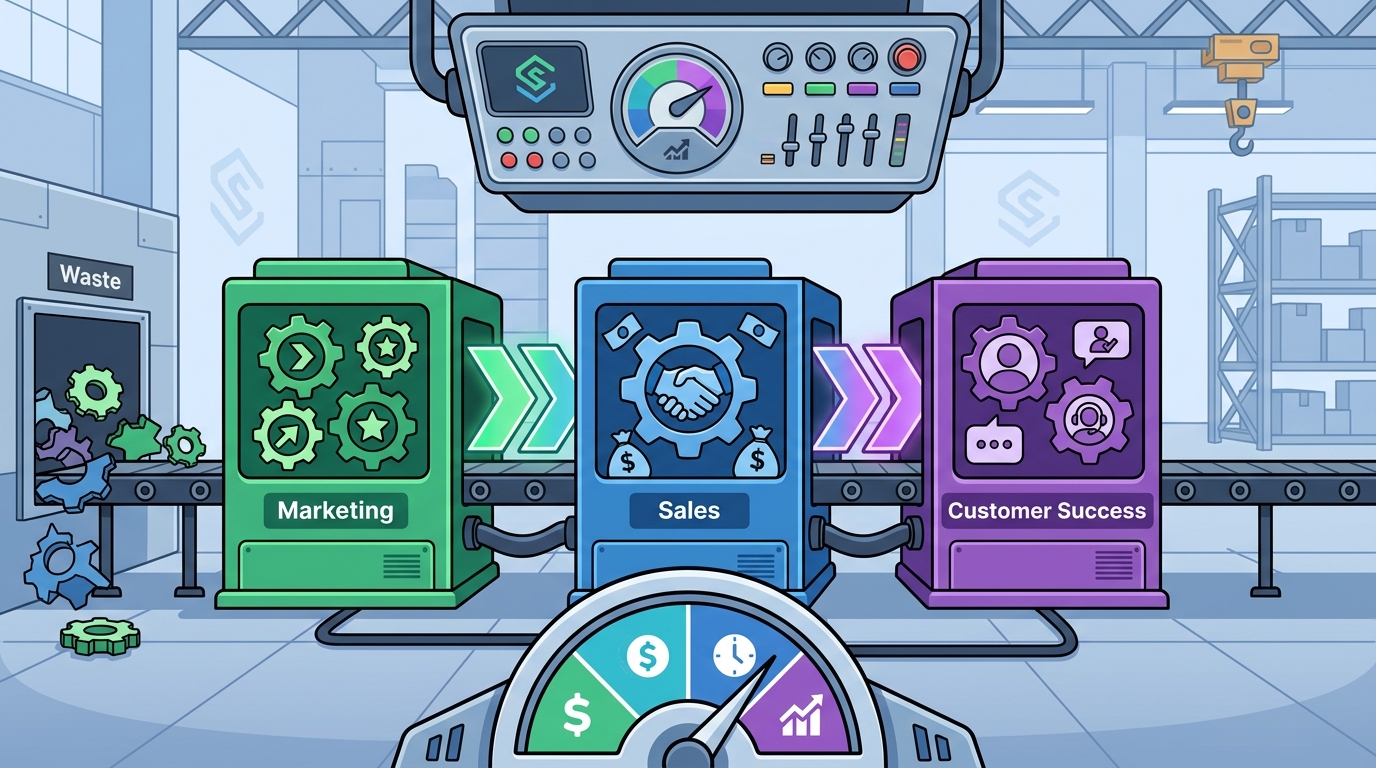
Leaders must evaluate departmental contributions using standardized benchmarks to ensure equitable goal setting. The following matrix outlines core metrics across sales, marketing, and customer success functions.
| Department | Primary KPI | Secondary Metric | Implementation Path |
|---|---|---|---|
| Marketing | Cost Per Qualified Lead | Marketing Qualified Lead Conversion Rate | Marketing Hub Implementation |
| Sales | Win Rate Percentage | Sales Cycle Duration | Sales Hub Configuration |
| Customer Success | Net Revenue Retention | Time To Value | Service Hub Deployment |
Aligning these metrics requires executive sponsorship and consistent reporting cadences. Departments must share accountability for overarching revenue targets rather than isolated departmental quotas. Regular performance audits ensure that KPI adjustments reflect market shifts and product updates. Our platform partners provide the necessary consulting to execute these matrix implementations flawlessly.
Key Takeaways
- Revenue operations is the centralized discipline that unifies sales, marketing, and customer success data into a single source of truth.
- Customer lifetime value is the total projected revenue a business expects to generate from a single client account throughout the entire relationship.
- Pipeline velocity is the calculated speed at which prospective deals move through each defined sales stage.
- Companies that integrate sales, marketing, and customer success around shared KPIs experience significantly faster revenue cycles.
- Organizations adopting automated tracking report significantly higher forecast accuracy and reduced administrative overhead.
- Our team has helped clients grow ARR by forty percent to six million dollars within eight months of implementation.
- Standardized handoff protocols reduce customer acquisition costs by nearly eighteen percent across enterprise B2B sectors.
Frequently Asked Questions
How do I establish shared KPIs across sales, marketing, and customer success?
Establish shared KPIs by convening department heads to define unified revenue targets. Map each departmental workflow to a specific metric that contributes to the overarching goal. Implement centralized dashboards to track progress in real time. Review performance monthly to adjust targets based on market conditions and product updates.
What technical tools are required to align these departments?
Aligning departments requires a centralized CRM platform integrated with marketing automation and customer success software. Configure automated routing rules to transfer leads seamlessly between teams. Enable real-time data synchronization to prevent information silos. Utilize reporting modules to generate cross-functional performance reports.
How often should leadership review cross-departmental KPIs?
Leadership should review cross-departmental KPIs on a weekly basis during pipeline meetings. Monthly strategic reviews should assess long-term trends and adjust resource allocation. Quarterly business reviews must evaluate overall revenue attainment against annual targets. Consistent review cycles prevent metric drift and maintain operational alignment.
Can AI agents improve KPI tracking accuracy?
AI agents improve tracking accuracy by continuously enriching contact records and predicting deal outcomes. Machine learning models identify high-intent behaviors that manual scoring often misses. Automated data extraction reduces administrative overhead and minimizes human error. These tools sync directly into CRM platforms to maintain real-time visibility.
What is the typical timeline for implementing aligned KPI frameworks?
Implementing aligned KPI frameworks typically requires three to six months for full deployment. Initial discovery phases map existing workflows and identify data gaps. Configuration phases integrate technical platforms and establish automated routing rules. Training phases ensure all team members understand new reporting requirements and handoff protocols.
How do I measure the ROI of aligned departmental KPIs?
Measure ROI by comparing pre-implementation acquisition costs against post-implementation revenue growth. Track reductions in sales cycle duration and improvements in win rate percentages. Calculate net revenue retention improvements resulting from smoother customer success handoffs. Compare these financial improvements against implementation and operational costs to determine total return.
Next Steps
Aligning sales, marketing, and customer success around shared KPIs requires strategic planning, technical integration, and consistent execution. Our team provides fractional revenue operations consulting to design and deploy these exact frameworks. Schedule a consultation today to transform your disjointed departments into a unified revenue engine. Book your strategy session now to begin scaling predictable growth.