

Organizations that align sales and marketing operations typically experience faster revenue cycles and higher conversion rates. According to recent industry benchmarks, companies with mature revenue operations frameworks report a 19 percent increase in annual recurring revenue within the first twelve months. This growth stems from standardized data flows, automated follow-up sequences, and unified team objectives. Gartner sales research confirms that enterprise buyers now expect personalized experiences that address specific operational challenges before any pricing discussion occurs. Establishing these foundational systems reduces customer acquisition costs while accelerating deal velocity across complex enterprise sales cycles. (Revenue Operations Agency About)
Defining Revenue Operations and Sales Alignment
Revenue operations is the centralized discipline that unifies sales, marketing, and customer success data into a single source of truth. This framework eliminates departmental silos and ensures every team member tracks the same key performance indicators. Companies that adopt this unified approach consistently outperform competitors in forecast accuracy and resource allocation. CRM infrastructure requirements form the backbone of this alignment. Organizations must deploy enterprise-grade platforms that support custom object mapping, automated workflow triggers, and real-time dashboard reporting. HubSpot CRM implementation provides the necessary architecture to track every touchpoint from initial campaign exposure to final contract signature. Teams should prioritize platforms that offer native API connectivity to prevent data fragmentation across disparate software ecosystems.
Data Enrichment Protocols
Manual data entry creates critical bottlenecks that stall sales momentum and inflate operational overhead. Automated data enrichment protocols continuously validate contact records, append missing firmographic details, and flag stale accounts before they impact quarterly targets. Sales development representatives require accurate prospect profiles to execute targeted outreach campaigns without wasting time on disqualified leads. Marketing operations as a service teams configure these enrichment rules to ensure lead scoring models reflect actual buying signals rather than generic demographic assumptions. When data quality remains high, sales teams can focus on relationship building instead of administrative cleanup.
Implementing Buyer-Centric Sales Methodologies
Buyer-centric sales is an approach to selling that focuses on understanding and meeting the needs of the buyer. This methodology shifts the entire sales cycle away from aggressive pitching and toward consultative problem solving. Enterprise buyers now expect personalized experiences that address their specific operational challenges before any pricing discussion occurs. Market research templates provide the structured foundation for this transition. B2B organizations must document target audience pain points, competitive landscape shifts, and industry-specific regulatory constraints before drafting outreach sequences. Sales enablement best practices dictate that every piece of content must map directly to a stage in the customer journey. Prospecting strategy outlines then translate these research findings into actionable daily activity metrics for sales development teams.
Market Research Templates
Comprehensive market research templates standardize how teams gather competitive intelligence and map buyer personas. These documents capture historical win rates, objection handling patterns, and ideal customer profile parameters. Sales leadership uses these templates to train new hires on proven negotiation frameworks rather than relying on trial and error. Fast track onboarding workflows accelerate this training process by providing pre-built communication scripts and objection response matrices. When sales teams operate from a unified playbook, forecast accuracy improves and ramp time decreases significantly across the entire organization.
Automating Pipeline Management and Follow-Ups
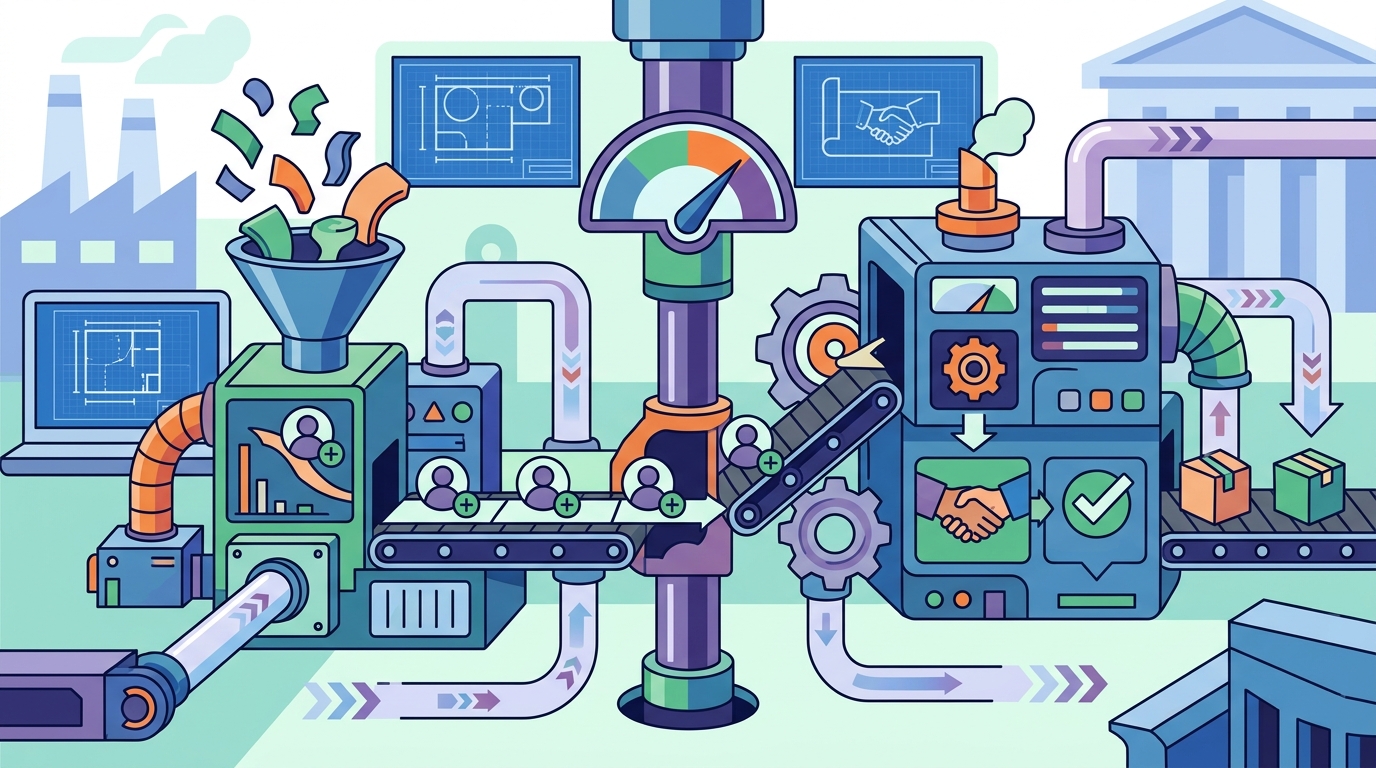
Pipeline management automation eliminates manual status updates and ensures every opportunity receives timely follow-up. Sales automation processes route qualified leads to the appropriate account executive based on territory, deal size, and product interest. Marketing automation platforms nurture unqualified prospects through educational content sequences until they reach marketing qualified status. Marketing operations as a service providers configure these automated workflows to trigger personalized email sequences, calendar booking links, and content delivery notifications. These systems maintain consistent communication cadences without requiring constant human intervention. Sales teams benefit from automated task assignments that prioritize high-value opportunities and flag at-risk deals before they slip past close dates.
Fast Track Onboarding Workflows
Fast track onboarding workflows compress the traditional three to six month implementation timeline into accelerated delivery schedules. These structured programs standardize system configuration, data migration protocols, and team training modules. Organizations adopting accelerated deployment frameworks report faster time to value and reduced change management friction. Sales leadership can deploy these workflows to rapidly integrate new hires, migrate legacy data, and activate reporting dashboards. The standardized approach ensures consistent user adoption across all departments while minimizing operational disruption during critical growth phases.
Leveraging Artificial Intelligence for Account Intelligence
AI sales agents are automated software programs that continuously scan public records, social signals, and transactional data to surface actionable insights. These intelligent systems prioritize outreach sequences based on predicted conversion probability rather than arbitrary chronological order. Astro and Nebula agent capabilities represent the next generation of sales enablement technology. Astro handles rapid data extraction and builds comprehensive account profiles while monitoring competitor activity. Nebula manages real-time data updates and automatically enriches incomplete records to maintain database accuracy. McKinsey sales data shows that sales teams leverage these tools to reduce research time by eighty percent while increasing contact quality across enterprise accounts.
AI Agent Integration Requirements
Successful AI integration requires strict data governance policies and clear user permission structures. Organizations must define which data points trigger automated outreach and establish fallback protocols for system errors. Technical teams configure API connections to ensure seamless synchronization between intelligence platforms and primary CRM environments. Sales development managers monitor AI performance metrics to refine prediction models and adjust outreach thresholds. These intelligent systems continuously learn from historical win rates to optimize future prospecting strategies without manual recalibration.
Structuring Fractional Revenue Leadership
Fractional revenue operations provides enterprise-level strategic guidance without the overhead of full-time executive compensation. This model delivers specialized expertise in CRM architecture, sales process optimization, and marketing technology stack management. Companies engage fractional leaders to diagnose operational bottlenecks, redesign sales methodologies, and implement scalable growth frameworks. CRM development and build outs require experienced architects who understand complex enterprise sales cycles and multi-touch attribution models. Fractional consultants design custom reporting hierarchies that align with executive board expectations and investor reporting requirements. Organizations benefit from flexible engagement models that scale alongside business growth while maintaining consistent operational standards.
| System Component | Primary Function | Implementation Complexity | Expected ROI Timeline |
|---|---|---|---|
| CRM Infrastructure | Centralizes customer data and tracks all interactions | Medium | 3 to 6 months |
| Marketing Automation | Nurture leads and score campaign engagement | Medium | 2 to 4 months |
| AI Sales Agents | Extract data and enrich prospect profiles | High | 1 to 3 months |
| Fractional RevOps | Strategic oversight and process optimization | Low | Ongoing |
Key Takeaways
- Companies with mature revenue operations frameworks report a 19 percent increase in annual recurring revenue within the first twelve months.
- CRM infrastructure requirements must support custom object mapping and real-time dashboard reporting to prevent data fragmentation.
- Buyer-centric sales methodologies shift focus from aggressive pitching to consultative problem solving and personalized experiences.
- AI sales agents reduce research time by eighty percent while increasing contact quality across enterprise accounts.
- Fractional revenue operations provides enterprise-level strategic guidance without the overhead of full-time executive compensation.
- Fast track onboarding workflows compress traditional implementation timelines into accelerated delivery schedules.
- Marketing automation platforms nurture unqualified prospects through educational content sequences until they reach marketing qualified status.
Frequently Asked Questions
How long does a standard CRM implementation take?
Standard CRM implementation projects typically range from three to six months depending on data volume and custom workflow requirements. Organizations with complex enterprise sales cycles may require extended timelines to accommodate multi-touch attribution modeling and advanced reporting hierarchies. Fractional revenue consultants design phased deployment schedules that minimize operational disruption while maximizing user adoption rates.
What is the difference between marketing operations and sales operations?
Marketing operations focuses on campaign execution, lead scoring models, and content distribution workflows. Sales operations concentrates on pipeline forecasting, territory planning, and quota management structures. Both functions require centralized data platforms to maintain alignment and prevent conflicting performance metrics across departments.
How do AI sales agents integrate with existing CRM platforms?
AI sales agents connect to existing CRM platforms through secure API integrations that synchronize contact records and activity logs. These systems extract public data, enrich incomplete profiles, and flag high-probability opportunities without disrupting daily workflows. Technical teams configure permission settings to ensure data privacy compliance and maintain system security standards.
When should a company hire fractional revenue operations leadership?
Organizations should engage fractional revenue leadership when scaling beyond initial product market fit or transitioning between enterprise software platforms. Fractional consultants provide specialized expertise in sales process optimization, marketing technology stack management, and executive reporting alignment. This model delivers enterprise-level strategic guidance without the overhead of full-time executive compensation.
What metrics determine successful sales and marketing alignment?
Successful alignment requires tracking lead conversion rates, sales cycle duration, customer acquisition costs, and forecast accuracy percentages. Teams must establish shared key performance indicators that reflect mutual accountability for revenue generation and pipeline health. Regular cross-departmental reviews ensure both sales and marketing strategies adapt to shifting market conditions and buyer expectations.
How does buyer-centric sales differ from traditional sales approaches?
Traditional sales approaches prioritize seller goals and quarterly targets over customer needs. Buyer-centric sales methodologies focus on understanding operational challenges and delivering personalized solutions before discussing pricing. This shift requires comprehensive market research templates and prospecting strategy outlines to guide every customer interaction.
What are the primary benefits of fast track onboarding workflows?
Fast track onboarding workflows compress traditional implementation timelines into accelerated delivery schedules that reduce change management friction. Organizations adopting these structured programs report faster time to value and improved sales team productivity. Standardized training modules and pre-built communication scripts ensure consistent user adoption across all departments.
Ready to Optimize Your Revenue Operations?
Implementing these systems requires strategic planning, technical expertise, and consistent executive sponsorship. Schedule a consultation with our revenue operations team to evaluate your current infrastructure and design a customized implementation roadmap. Our consultants specialize in HubSpot CRM implementation, sales automation processes, and AI sales agents that accelerate enterprise growth. Explore our service offerings to discover how fractional revenue operations can transform your sales cycle. Learn more about our AI agents and how they integrate with your existing technology stack. Download our B2B sales strategy framework to access proven methodologies for market research and team training. Start your fast track onboarding today and accelerate your path to predictable revenue growth.