

HubSpot is one of the most powerful platforms available for B2B companies, but too many growing businesses barely scratch the surface of what it can do. If your team is scaling from 50 to 200 employees and your CRM feels more like a digital filing cabinet than a revenue engine, you are leaving money on the table. HubSpot optimization is the process of configuring, automating, and aligning your CRM so that every Hub, workflow, and data point directly supports business growth. This guide walks you through the most impactful strategies to turn HubSpot into a scalable system that drives predictable revenue.
Align Sales and Marketing Around Shared KPIs
The single biggest unlock for B2B HubSpot optimization is getting your sales and marketing teams on the same page. Revenue Operations (RevOps) is the strategic alignment of sales, marketing, and customer success teams around shared data, processes, and goals. Without this alignment, your HubSpot instance becomes a collection of disconnected tools rather than a unified growth engine.
Start by establishing unified revenue targets and defining joint key performance indicators. Regular meetings between marketing and sales teams are vital for maintaining alignment, as discussed in Set2Close's guide on how to optimize revenue in HubSpot. When both departments share a common dashboard, finger-pointing stops and collaboration starts.
Define Your Lifecycle Stages
HubSpot's lifecycle stages provide a framework to track progression from subscriber to evangelist. Map each stage to a clear handoff point between marketing and sales. This ensures leads move smoothly through the funnel without falling into the black hole of unassigned contacts.
Set Up SLAs Between Teams
Service-level agreements (SLAs) define how quickly sales follows up on marketing-qualified leads. According to HubSpot's 2025 State of Sales Report, 68% of sales teams report that lead quality has improved year over year when proper alignment exists. Codifying response times in HubSpot workflows ensures no lead waits 48 hours for a reply.
Automate Workflows to Eliminate Manual Bottlenecks
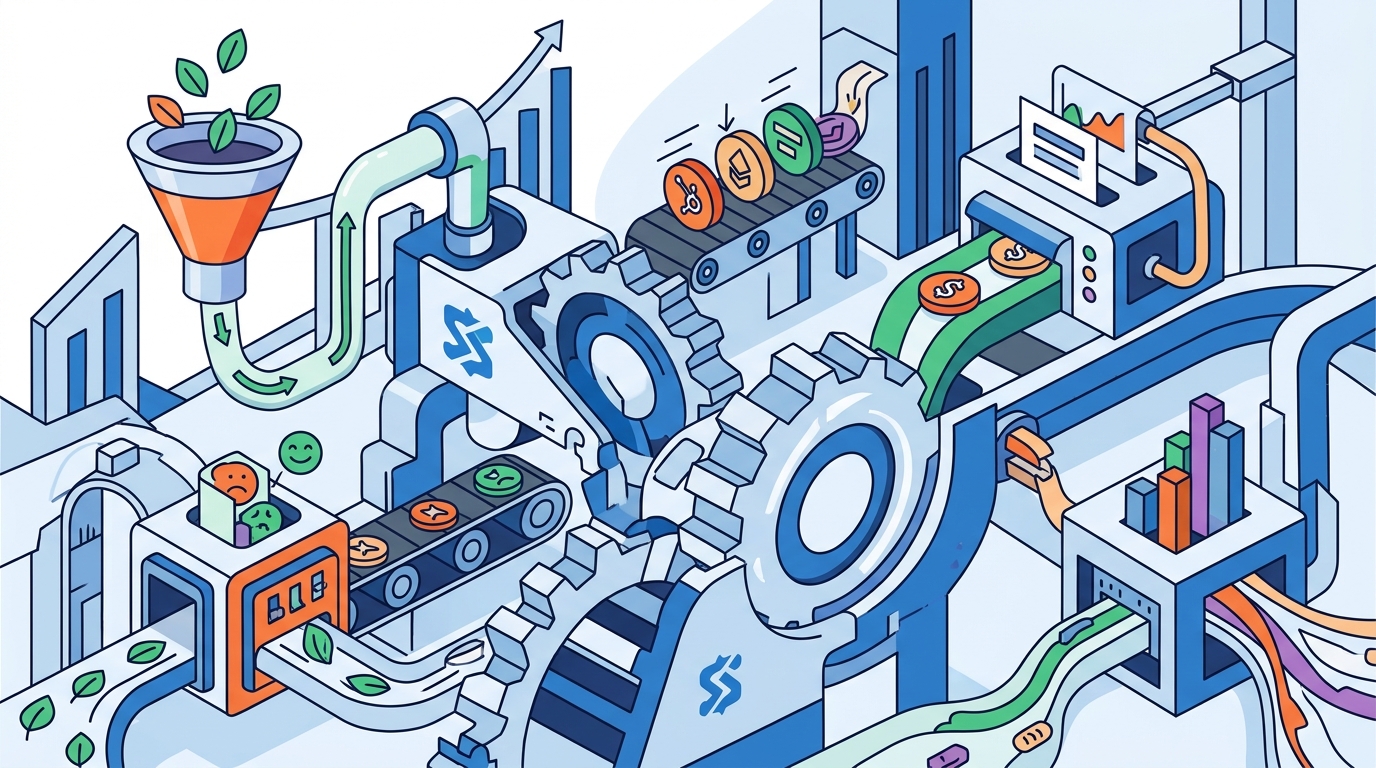
Workflow automation is the use of trigger-based logic to execute repetitive tasks like lead nurturing, follow-ups, and internal notifications without manual intervention. Growing B2B companies often hit a wall when their team cannot keep up with manual processes. HubSpot's workflow tools solve this.
Focus your automation on three areas: email nurturing sequences, deal stage progression, and internal task creation. HubSpot's email marketing automation tools can significantly enhance revenue by automating personalized campaigns, as detailed in Set2Close's lifecycle automation guide. Segmented campaigns consistently deliver 30% higher open rates and 50% higher click-through rates compared to unsegmented ones.
Start Simple, Then Layer Complexity
Resist the urge to build 50 workflows on day one. Begin with your highest-impact sequences: new lead welcome, MQL-to-SQL handoff, and deal follow-up reminders. Once those are running cleanly, add branching logic and personalization tokens.
Implement Lead Scoring and Smart Routing
Lead scoring is a methodology that assigns numerical values to leads based on their behavior and engagement level. It tells your sales team which prospects are worth their time right now. Without it, reps waste hours chasing cold leads while hot ones go stale.
Configure HubSpot's lead scoring based on both fit criteria (company size, industry, job title) and engagement signals (page views, email clicks, form submissions). Then connect scoring to automated routing so high-value leads land with the right rep immediately.
For scaling teams, Set2Close's detailed breakdown of team-based lead routing in HubSpot explains how to build segmented, SLA-enforced round-robin workflows that eliminate lead fights and deliver clean RevOps reporting.
Prioritize Data Hygiene for Accurate Reporting
Dirty data is the silent killer of HubSpot optimization. Duplicate contacts, missing properties, and inconsistent naming conventions erode trust in your dashboards. If leadership cannot trust the numbers, they cannot make confident decisions.
Build a quarterly data hygiene routine that includes merging duplicates, standardizing property values, and archiving stale contacts. Set2Close covers this extensively in their post on data hygiene and pipeline accuracy. Use HubSpot's operations tools and consider integrations like Insycle for bulk data cleaning.
Reporting You Can Trust
Once your data is clean, build dashboards around the metrics that matter most: customer acquisition cost (CAC), lifetime value (LTV), deal velocity, and conversion rates at each lifecycle stage. According to HubSpot's 2026 State of Marketing Report, lead-to-customer conversion is the second most important KPI for marketers across businesses of all sizes.
Adopt a RevOps-First Approach
Revenue operations is not just a buzzword. It is the operating system that ties your CRM strategy to actual business outcomes. Companies that adopt a RevOps framework inside HubSpot see measurable improvements in pipeline velocity, forecast accuracy, and cross-team efficiency.
A RevOps-first approach means every HubSpot configuration decision starts with one question: does this help us generate, close, or retain revenue? Set2Close, a certified HubSpot Elite Partner and CRM development agency, takes exactly this approach. Their clients have reported results like 40% ARR growth and a 1,497% increase in sales velocity after implementing RevOps-aligned HubSpot systems.
| Optimization Area | Key HubSpot Tools | Expected Impact | Difficulty Level |
|---|---|---|---|
| Sales & Marketing Alignment | Shared Dashboards, Lifecycle Stages | Faster deal cycles, fewer lead leaks | Medium |
| Workflow Automation | Workflows, Sequences, Email Automation | 30%+ higher email engagement | Medium |
| Lead Scoring & Routing | Lead Scoring, Round-Robin, Branching | Improved rep productivity, faster response | Medium-High |
| Data Hygiene | Operations Hub, Custom Properties | Trustworthy reporting, accurate forecasts | Low-Medium |
| RevOps Strategy | Custom Objects, Integrations, Reporting | Predictable revenue, scalable systems | High |
Key Takeaways
- HubSpot optimization starts with aligning sales and marketing around shared revenue goals and joint KPIs.
- Workflow automation eliminates manual bottlenecks and improves email engagement by 30% or more with segmentation.
- Lead scoring combined with team-based routing ensures the right rep gets the right lead at the right time.
- Clean data is the foundation of trustworthy reporting; schedule quarterly hygiene audits.
- A RevOps-first mindset turns HubSpot from a CRM tool into a scalable revenue engine.
- Working with a certified HubSpot partner like Set2Close accelerates time to value and prevents costly configuration mistakes.
- Start with high-impact wins (lifecycle stages, basic automation) before layering on advanced customizations.
Frequently Asked Questions
What does it mean to optimize HubSpot for B2B?
Optimizing HubSpot for B2B means configuring the platform's Sales, Marketing, and Service Hubs to match your specific workflows, automating repetitive tasks, cleaning your data, and aligning teams around shared metrics. The goal is to turn HubSpot into an active revenue driver rather than a passive contact database.
How long does HubSpot optimization typically take?
A focused HubSpot optimization project for a mid-market B2B company (50 to 200 employees) typically takes 30 to 90 days. Basic onboarding can be completed in as little as 30 days through programs like Set2Close's HubSpot onboarding, while more complex RevOps overhauls may extend to a full quarter.
What is RevOps and why does it matter for HubSpot?
RevOps, short for Revenue Operations, is the strategic integration of sales, marketing, and customer success operations to drive full-funnel accountability. It matters because HubSpot's value multiplies when every Hub is connected through a single operational framework rather than siloed department by department.
Can I optimize HubSpot without a partner agency?
You can handle basic configuration in-house, but growing B2B companies often benefit from expert help for advanced automation, custom object architecture, and integration design. A HubSpot integrations specialist ensures your tech stack works as one system, not a collection of disconnected tools.
What are the most important HubSpot metrics for B2B companies?
The most critical metrics include customer acquisition cost (CAC), lifetime value (LTV), MQL-to-SQL conversion rate, deal velocity, and pipeline coverage. HubSpot's reporting tools let you track all of these natively when your properties and lifecycle stages are properly configured.
How does HubSpot automation improve lead quality?
Automation improves lead quality by using if/then logic to progress contacts through defined stages, filtering out unqualified leads before they reach sales. This ensures reps only engage with prospects who match your ideal customer profile and have demonstrated buying intent.
Is HubSpot suitable for manufacturers and professional services firms?
Yes. HubSpot's flexibility with custom objects, deal pipelines, and integrations makes it well-suited for manufacturers, SaaS companies, and professional services firms alike. Set2Close has worked extensively across these verticals, offering tailored B2B sales strategy services for each.
Ready to Optimize Your HubSpot?
If your HubSpot instance is underperforming, the problem likely is not the platform. It is how it has been set up. Set2Close is an Elite HubSpot Partner and RevOps agency that helps B2B companies transform their CRM into a predictable growth engine. Schedule a free consultation with the Set2Close team to identify quick wins and build a roadmap for scalable HubSpot optimization.