

B2B Systems and Processes to Improve Sales and Marketing Performance
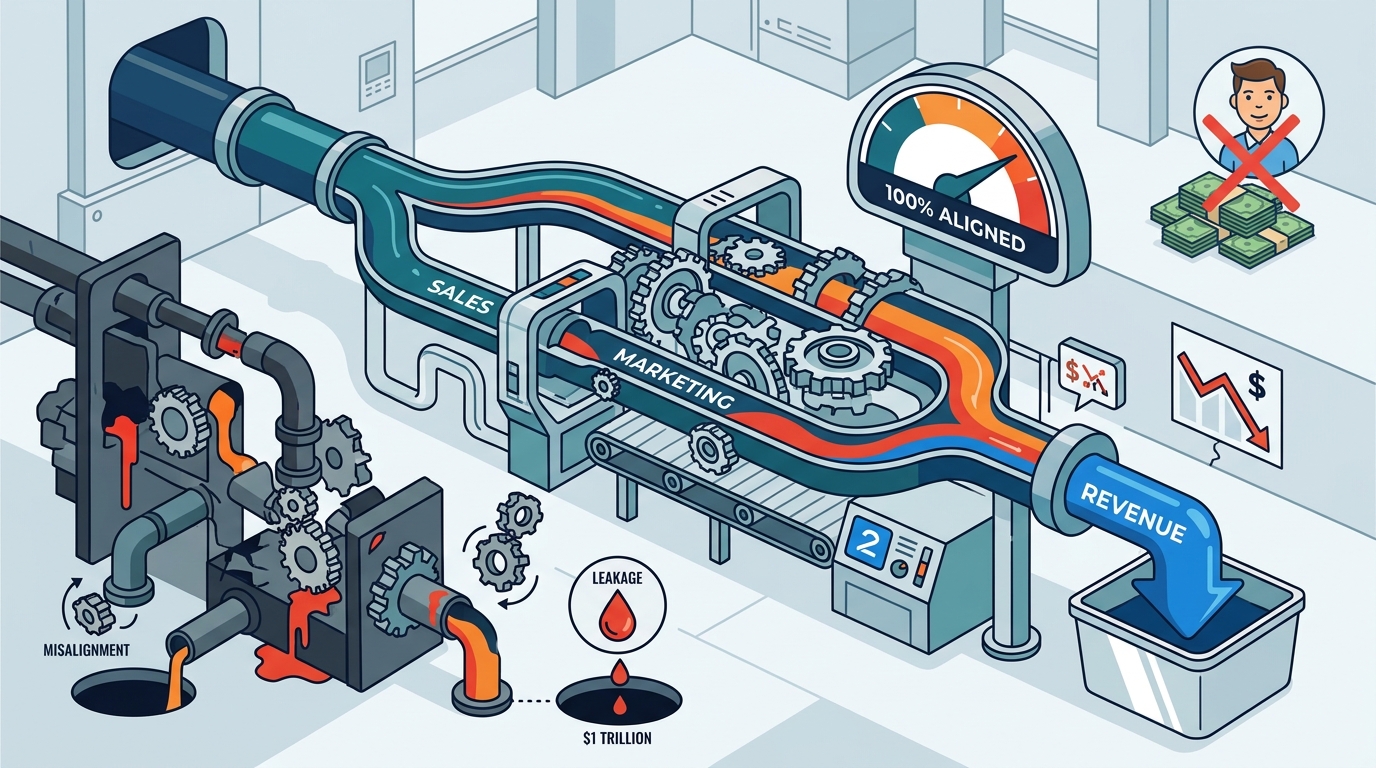
Most B2B companies know they need better sales and marketing results, but few realize the root cause of underperformance is structural. It is not a talent problem or a budget problem. It is a systems and processes problem. Research shows that only 8% of companies have strong alignment between their sales and marketing departments, and misalignment costs businesses an estimated $1 trillion annually. This guide breaks down the exact systems, processes, and frameworks B2B companies need to build a predictable, scalable revenue engine.
1. Start With a Revenue Operations Foundation
Revenue Operations (RevOps) is a strategic function designed to align and integrate sales, marketing, and customer success teams to drive revenue growth efficiently. Rather than treating each department as a silo, RevOps creates shared visibility across the entire customer lifecycle.
The data supports this approach. According to research from SiriusDecisions, aligned B2B organizations achieve 24% faster three-year revenue growth. Job titles like VP of Revenue Operations have increased by 300% in recent years, signaling that leadership teams are investing heavily in this model.
For B2B companies with 50 to 200 employees, a fractional RevOps engagement can deliver enterprise-level process design without the overhead of a full-time hire. The goal is to connect your people, processes, and technology into one cohesive system.
2. Implement and Optimize a Unified CRM
A CRM (Customer Relationship Management) system is the central platform where your teams track contacts, manage deals, and measure performance. However, most companies use less than 5% of their CRM's total capacity because their processes do not support the automation and enablement features available.
The key is not just purchasing a CRM but configuring it to match your actual workflows. A properly implemented platform like HubSpot combines CRM, Marketing Hub, Sales Hub, and Service Hub into one ecosystem, ensuring all teams operate from a single source of truth. That unification eliminates silos and delivers clear insights across the entire customer journey.
What a Well-Configured CRM Delivers
- Automated lead routing and deal stage progression
- Executive, manager, and rep-level dashboards
- Integration with email, calling tools, and marketing automation
- Real-time pipeline visibility and forecast accuracy
If your CRM is acting as a contact database rather than a revenue engine, a custom CRM development project can transform it into a system that actively drives performance.
3. Align Sales and Marketing Around Shared KPIs
Sales and marketing alignment is the process of connecting both teams around shared goals, strategies, and metrics. When alignment is strong, results follow: organizations with tightly aligned functions enjoy 36% higher customer retention and 38% higher win rates.
When alignment is weak, the waste is enormous. Between 60% and 70% of B2B marketing content goes unused by sales teams, while 65% of sales reps report they cannot find the content they need. That is not a content problem. It is an alignment problem.
Practical Alignment Steps
Hold a 30-minute weekly meeting between your sales manager, marketing manager, and leadership to review pipeline metrics and agree on priorities. Define what a qualified lead looks like so both teams share the same language. Build common reward structures that foster collaboration rather than competition.
| Metric | Misaligned Teams | Aligned Teams |
|---|---|---|
| Annual Revenue Growth | Up to 7% decline | 32% YoY growth |
| Customer Retention | Baseline | 36% higher |
| Sales Win Rate | Baseline | 38% higher |
| Marketing Content Utilization | 30-40% | 70%+ |
| Customer Acquisition Cost | Up to 36% higher | 30% lower |
4. Automate Lead Management and Handoffs
Manual lead routing and follow-up processes are among the biggest sources of lost revenue. When a prospect fills out a form and waits days for a response, that deal is likely gone. Workflow automation solves this by ensuring timely, consistent communication with every prospect.
A lead scoring system assigns values to leads based on their behavior and engagement level, allowing sales teams to prioritize the highest-value opportunities. Paired with automated email sequences and lifecycle stage management, your team can nurture more leads with less manual effort.
Platforms like HubSpot allow you to build automated marketing workflows that segment audiences, trigger personalized campaigns, and hand off sales-ready leads without human bottlenecks.
5. Build a Structured Sales Pipeline Process
A sales pipeline is a visual representation of where prospects sit in your buying journey, from initial contact to closed deal. Without clearly defined stages, reps guess at deal status and managers cannot forecast accurately.
Every pipeline should include defined entry and exit criteria for each stage, required fields that enforce data quality, and clear ownership at every step. An advanced B2B sales pipeline goes further with multi-touch attribution, deal velocity tracking, and post-sale handoff processes to customer success.
Core Pipeline Metrics to Track
- Lead-to-conversion rate
- Time from lead creation to booked call
- Show-up rate and offer rate
- Average sales cycle length
- Close rate by source and rep
6. Establish Data Hygiene and Reporting Practices
Dirty CRM data silently destroys forecasting accuracy. If your deal stages lack required fields, activity logging is inconsistent, or lifecycle definitions vary by rep, your dashboards will mislead rather than inform.
Companies using integrated platforms reduce data inconsistencies by 64% and increase forecasting accuracy by 26%, according to Gartner research. The foundation of good reporting is clean data, standardized definitions, and dashboards that leadership actually trusts.
Start with a revenue optimization audit that reviews your properties, lifecycle stages, automation logic, and reporting setup. Identify quick wins like removing duplicate records and standardizing deal stage definitions before tackling complex reporting needs.
Key Takeaways
- RevOps is the strategic framework that unifies sales, marketing, and customer success under shared goals and processes.
- A CRM should be a revenue engine, not just a contact database. Configuration matters more than the platform itself.
- Aligned organizations grow 24% faster and retain customers at 36% higher rates than misaligned peers.
- Automate lead routing, scoring, and handoffs to eliminate manual bottlenecks and speed up response times.
- Define clear pipeline stages with entry/exit criteria to improve forecasting and rep accountability.
- Invest in data hygiene first. Clean data is the foundation for every trustworthy report and forecast.
- Start with a focused audit of your current state before making system changes.
Frequently Asked Questions
What is Revenue Operations (RevOps)?
Revenue Operations is a strategic function that aligns sales, marketing, and customer success teams under shared processes, data, and goals. It replaces siloed department operations with a unified approach to driving revenue growth.
What CRM is best for B2B companies?
HubSpot is one of the most popular choices for mid-market B2B companies because it combines CRM, marketing automation, sales tools, and service features in a single platform. The right CRM depends on your team size, budget, and integration needs.
How do I align my sales and marketing teams?
Start with shared KPIs such as pipeline contribution and lead-to-close rate. Hold regular cross-functional meetings, agree on a common definition of a qualified lead, and use a unified CRM so both teams see the same data.
What processes should I automate first?
Lead routing, email follow-up sequences, and lifecycle stage updates are the highest-impact automations for most B2B companies. These reduce response time and ensure no lead falls through the cracks.
How long does it take to implement RevOps?
A typical RevOps program takes 3 to 6 months to implement depending on complexity. Some agencies can deploy foundational systems in as few as 8 weeks with the right scoping and prioritization.
What are the most important sales pipeline metrics?
Focus on lead-to-conversion rate, average sales cycle length, close rate by source, deal velocity, and forecast accuracy. These metrics give both reps and leadership the visibility needed to improve consistently.
How does poor data quality affect sales performance?
Inaccurate or inconsistent CRM data leads to unreliable forecasts, wasted rep time, and missed opportunities. Companies with clean, integrated data see up to 26% improvement in forecasting accuracy.
Do I need an agency to set up these systems?
Not necessarily, but working with an experienced RevOps partner accelerates results and prevents costly configuration mistakes. A HubSpot implementation partner can build your system right the first time.
Ready to Build Your Revenue System?
If your B2B company is running on disconnected tools, inconsistent processes, or gut-feel forecasting, it is time to invest in the systems that drive predictable growth. Set2Close specializes in helping B2B companies implement RevOps strategies, optimize HubSpot, and align teams around shared revenue goals. Explore our B2B sales strategy services or book a free RevOps strategy session to get a personalized action plan for your business.