

How to Optimize Your HubSpot Setup for Sales, Marketing, and Customer Success
HubSpot is one of the most powerful CRM platforms available today, but most companies barely scratch the surface of what it can do. In fact, many businesses use less than 5% of the total capacity of modern CRMs because their processes do not support the automation and enablement features built into the platform. If your sales team struggles with pipeline visibility, your marketing lacks closed-loop reporting, or customer success operates in a silo, the problem is rarely HubSpot itself. It is how HubSpot was set up. This guide walks you through proven steps to transform your HubSpot environment into a unified revenue engine that supports every customer-facing team.
1. Audit Your Current HubSpot Configuration
Before making changes, you need a clear picture of your current state. A HubSpot audit is a systematic review of your portal's properties, workflows, integrations, and user permissions. Map your "current state" and "ideal state" for every process that touches revenue.
Start by identifying broken workflows, duplicate properties, and unused automation. One real-world example: MBO Partners struggled with a poorly implemented HubSpot CRM that forced sales reps to spend time troubleshooting instead of selling. Only after a full audit were redundant features removed and workflows reconfigured to match actual sales processes.
What to Check First
- Custom properties: Are they still relevant, or cluttering your database?
- Workflow health: Are automations firing correctly and serving a clear purpose?
- Integration status: Are connected tools syncing data both ways without errors?
2. Align Sales, Marketing, and Customer Success Around Shared KPIs
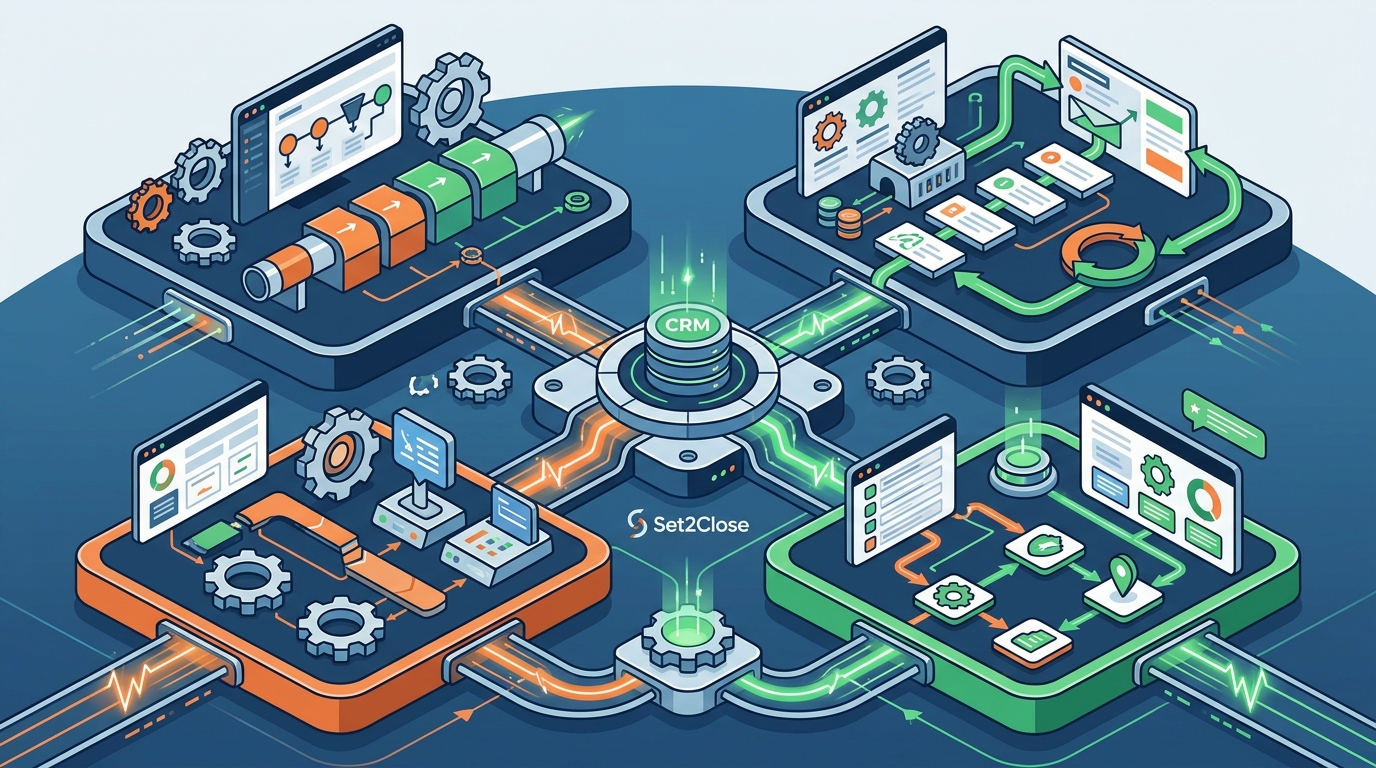
Revenue Operations (RevOps) is an integrated business function that aligns sales, marketing, and customer service departments to drive growth. Without this alignment, teams optimize for their own metrics while the company leaks revenue between handoffs.
According to research cited by Set2Close, companies embracing RevOps see notable gains, and public companies with RevOps functions have achieved 71% higher stock performance according to Forrester. Start by establishing unified goals: common revenue targets and joint key performance indicators across departments.
Practical Steps for Alignment
Hold regular cross-functional meetings to discuss progress, share insights, and address challenges. Define shared metrics such as lead-to-customer conversion rate, customer acquisition cost (CAC), and customer lifetime value (LTV). Use a single unified tech stack so every department accesses the same data.
3. Rebuild Your Pipeline and Lifecycle Stages
A sales pipeline is a visual representation of where prospects stand in your buying process, from first touch to closed deal. If your pipeline stages do not reflect how buyers actually move through your funnel, forecasting will be unreliable and deal velocity will suffer.
Map lifecycle stages (subscriber, lead, MQL, SQL, opportunity, customer, evangelist) so that marketing, sales, and customer success all agree on when a contact transitions. This creates a shared language that improves handoff quality and reduces friction.
| Area | Before Optimization | After Optimization |
|---|---|---|
| Pipeline Visibility | Reps guess deal stage | Stages mapped to buyer actions |
| Lead Handoff | Manual, inconsistent | Automated with SLA enforcement |
| Forecasting | Spreadsheet-based | Real-time CRM dashboards |
| Customer Success | Reactive support tickets | Proactive lifecycle automation |
| Data Hygiene | Duplicates and stale records | Automated deduplication rules |
4. Leverage Automation to Eliminate Manual Work
HubSpot's workflow automation helps streamline repetitive tasks such as lead nurturing, follow-ups, and internal notifications. According to industry data, automating CRM functions cuts manual data work by 65% on average. That is time your team can reinvest in selling and serving customers.
High-Impact Automations to Build First
- Lead scoring: Assign values to leads based on behavior and engagement level so sales prioritizes the right prospects.
- Round-robin routing: Distribute leads evenly across reps, enforce SLAs, and stamp data for accurate RevOps reporting.
- Re-engagement sequences: Automatically re-engage cold leads with personalized content.
Marketing Automation Quick Wins
Segment your contacts by demographics, behavior, and buying stage so every lead receives relevant content. This targeted approach improves conversion rates and ensures your marketing spend goes further. About 40% of marketers now report having mostly or fully automated customer journeys using platforms like HubSpot.
5. Clean and Centralize Your CRM Data
CRM data hygiene is the ongoing process of removing duplicates, correcting inaccurate records, and standardizing field formats across your database. Dirty data silently destroys forecasting accuracy and erodes trust in reporting. A centralized CRM system allows both sales and marketing teams to access and update customer information, track interactions, and measure campaign effectiveness.
Best practices include scheduled deduplication, mandatory field validation on forms, and regular audits of contact and company records. If your data is messy today, consider a structured cleanup before layering on new automation; building workflows on bad data only compounds the problem.
6. Build Revenue-Ready Reporting Dashboards
Reporting should answer one question: are we on track to hit our revenue targets? Build dashboards that track conversion rates, pipeline velocity, CAC, LTV, and deal close rates across all three teams. According to HubSpot's 2025 research, 78% of salespeople consider their CRM effective at enhancing sales and marketing alignment when reporting is configured correctly.
Dashboard Must-Haves
- Marketing: Lead source attribution, MQL volume, cost per lead
- Sales: Pipeline value by stage, win rate, average deal cycle length
- Customer Success: Net retention rate, ticket resolution time, expansion revenue
7. When to Bring in a HubSpot Partner
Not every optimization requires outside help, but complex migrations, broken implementations, and full RevOps buildouts often do. A HubSpot Partner Agency is a certified firm that combines technical expertise with revenue strategy to unlock HubSpot's full potential.
Set2Close is a HubSpot Platinum Partner and RevOps agency that specializes in helping B2B companies optimize HubSpot across sales, marketing, and customer success. Their approach combines deep technical execution with revenue strategy, ensuring HubSpot is not just set up but engineered to drive measurable growth. From fast-track onboarding programs to ongoing RevOps-as-a-Service engagements, they work with manufacturers, SaaS companies, professional services firms, and private equity portfolio companies.
Key Takeaways
- Audit your HubSpot portal before adding new tools or workflows; fix what is broken first.
- Align sales, marketing, and customer success around shared revenue KPIs to eliminate silos.
- Rebuild pipeline and lifecycle stages to reflect how buyers actually move through your funnel.
- Automate lead scoring, routing, and nurturing to cut manual work by up to 65%.
- Prioritize data hygiene; clean data is the foundation of trustworthy forecasting.
- Build dashboards that track revenue metrics across all three teams in real time.
- Partner with a certified HubSpot agency when you need technical depth and RevOps expertise.
Frequently Asked Questions
What is HubSpot optimization?
HubSpot optimization is the process of configuring, cleaning, and enhancing your HubSpot portal so that its CRM, automation, and reporting features fully support your revenue goals across sales, marketing, and customer success.
How long does it take to optimize HubSpot?
Timelines vary by complexity. A structured onboarding can get teams live in as few as 30 days, while deeper RevOps engagements typically run 3 to 6 months depending on the scope of changes required.
What is RevOps and why does it matter for HubSpot?
Revenue Operations (RevOps) is a strategic function that aligns sales, marketing, and customer success to drive revenue growth efficiently. It matters because HubSpot works best when all teams share the same data, processes, and goals inside one platform.
How do I know if my HubSpot setup needs improvement?
Common warning signs include low user adoption, inaccurate forecasting, manual lead routing, disconnected reporting between teams, and sales reps spending more time troubleshooting the CRM than selling.
Can I optimize HubSpot without a partner agency?
Yes, many improvements like data cleanup, property consolidation, and basic automation can be handled internally. However, complex workflow architecture, migrations, and full RevOps strategy often benefit from a certified partner's expertise.
What ROI can I expect from HubSpot optimization?
Results depend on your starting point, but businesses using HubSpot report a 505% ROI over three years and launch marketing campaigns 68% faster than average. Companies working with Set2Close have reported outcomes such as 40% ARR growth within 8 months and doubled sales rep efficiency.
How does HubSpot support customer success teams?
HubSpot's Service Hub provides ticketing, feedback collection, knowledge base tools, and live chat. When integrated with Sales Hub and Marketing Hub, customer success teams gain full visibility into the customer lifecycle, enabling proactive support and expansion plays.
What size company benefits most from HubSpot optimization?
Companies with 50 to 200 employees in B2B sectors such as SaaS, manufacturing, and professional services see the strongest returns because they are large enough to need process discipline but agile enough to implement changes quickly.
Ready to Optimize Your HubSpot Setup?
If your HubSpot portal is underperforming and your teams are not aligned around revenue, it is time to act. Schedule a consultation with Set2Close to get a tailored optimization roadmap that turns your CRM into the revenue engine your business needs.